Diaz Family Crest, Coat of Arms and Name History
Diaz Coat of Arms Gallery
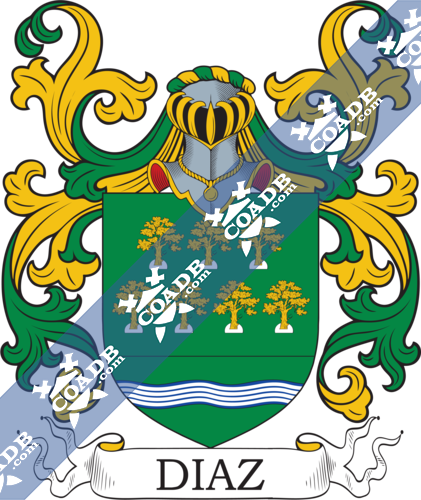
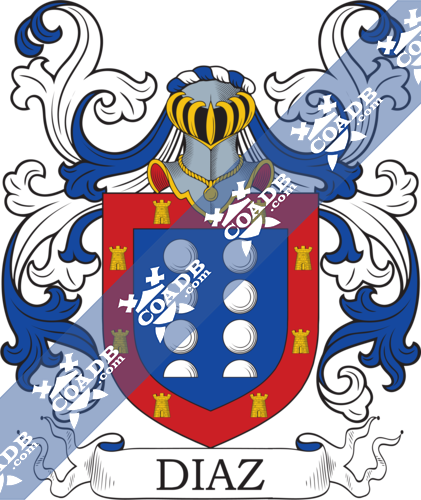
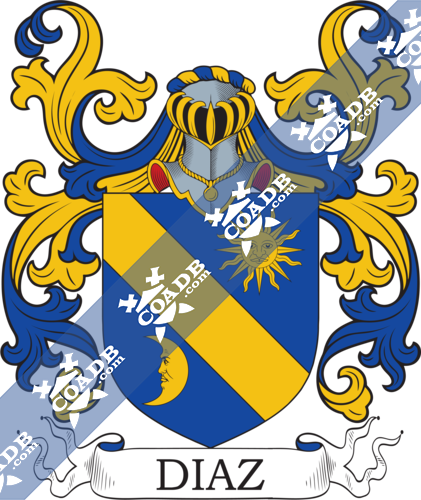
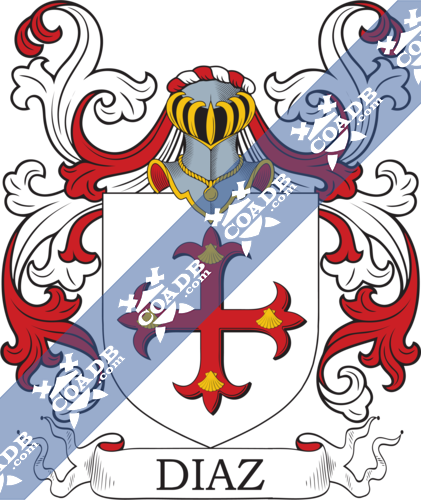
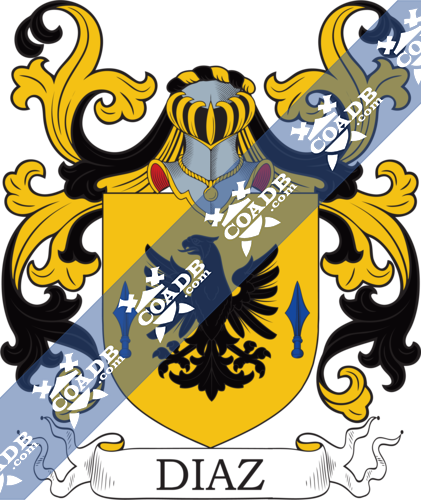
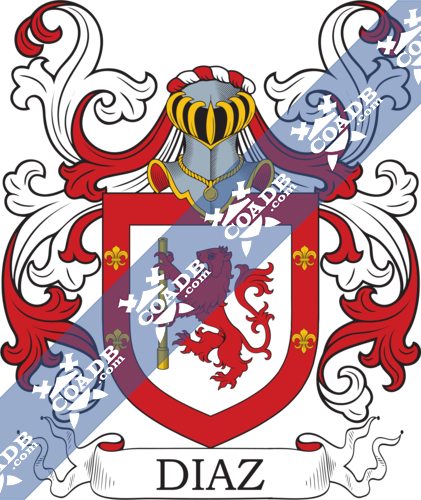
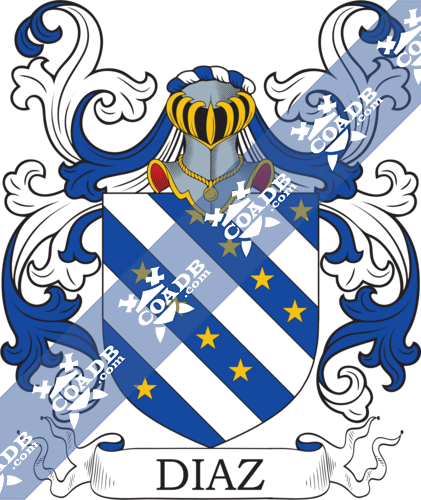
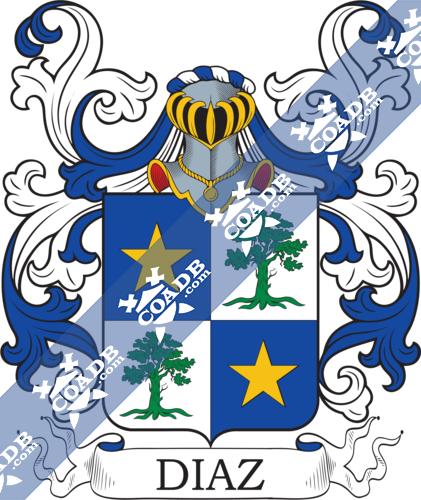
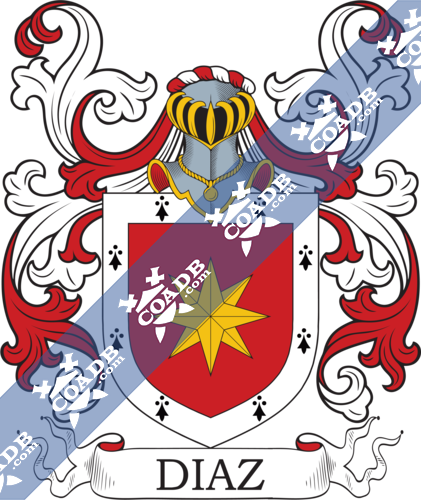
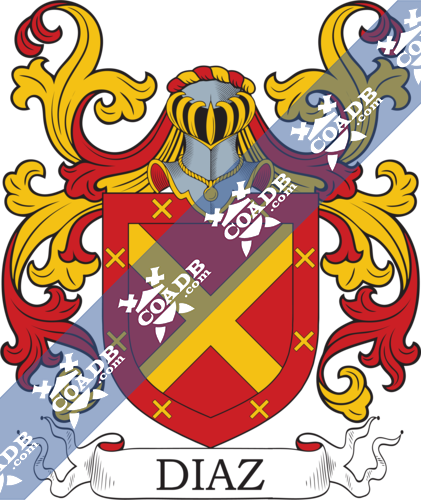
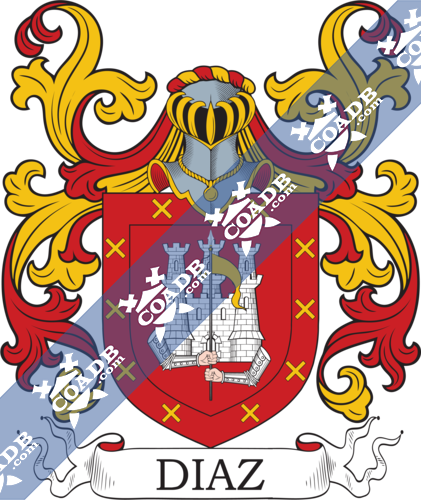
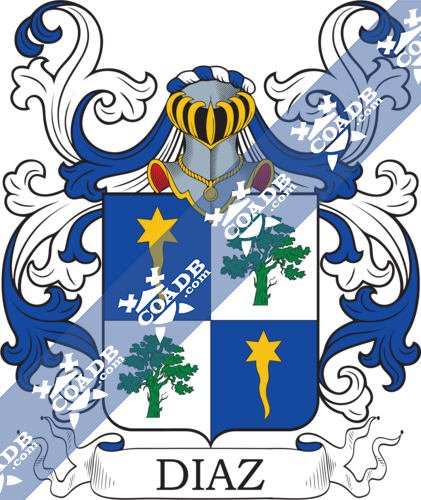
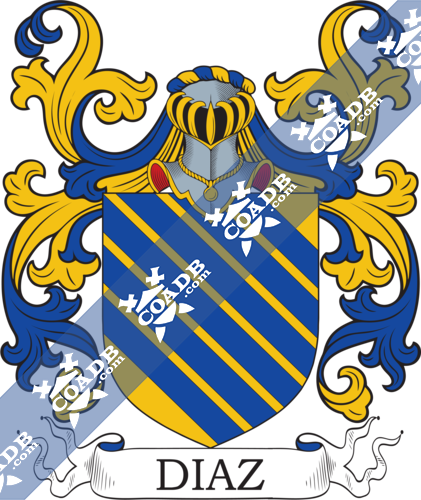
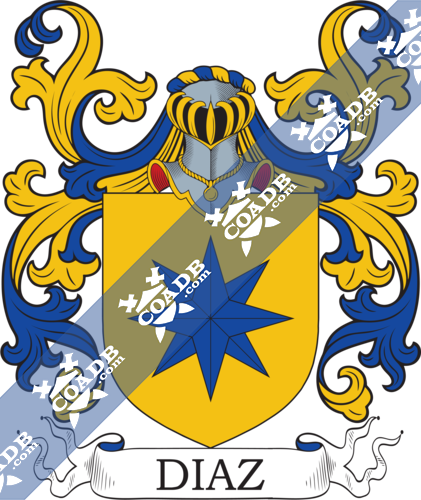
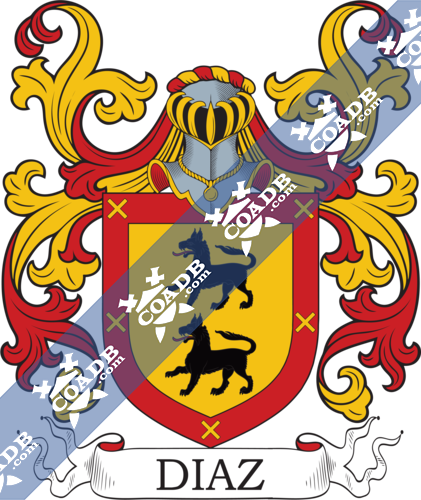
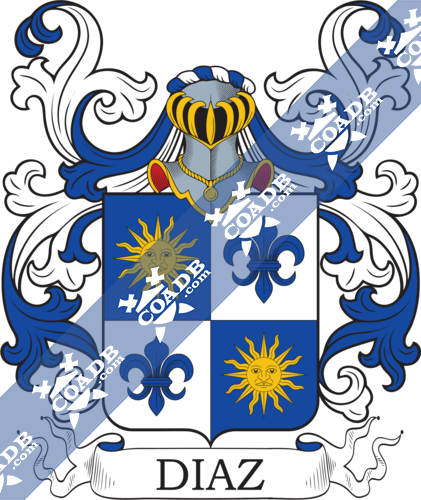
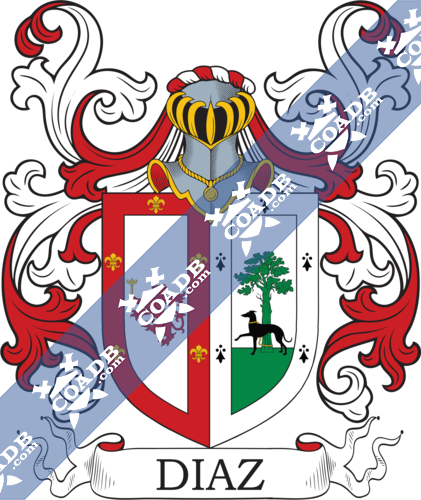
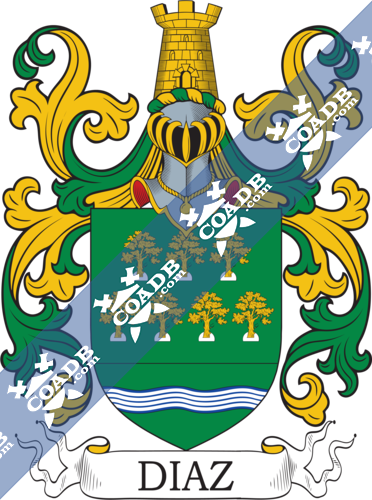
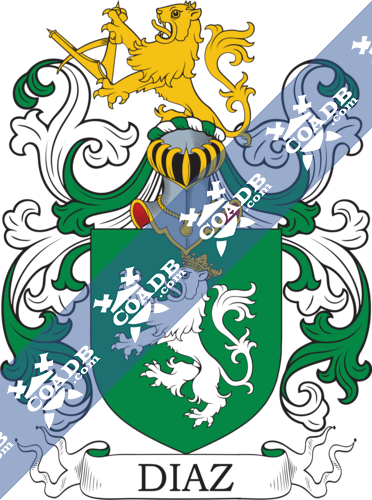
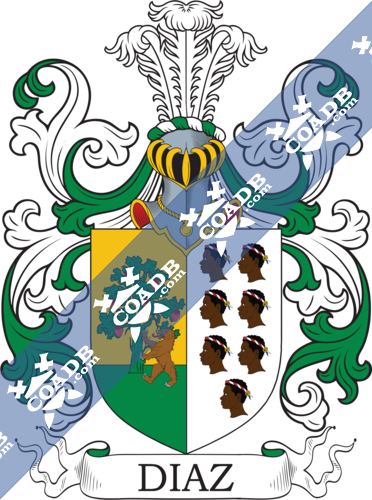
Don’t know which Coat of Arms is yours?
We can do a genealogical research. Find out the exact history of your family!
Learn MoreSurname Meaning, Origin, and Etymology
Spain is a country where many of the current Hispanic surnames were born, such is the case of the surname Diaz. This surname that belongs to the category of the patronymic surnames, which means that it is derived from the name of the father to indicate that its bearer is a son of that one, in this case, Diaz means “son of Diego”. Patronymic surnames started to being used in Spain during the middle of the 9th century and because of their nature of coming from the name of the father, its users are necessarily related between each other, in other words, there are many Diaz families that are not connected.
Diaz is a surname that can be found for the first time in the old Spanish kingdoms of Castile and Leon during the Visigoth period in Spain. According to some experts, this surname has also a Sephardic Jewish origin, because there was a period when the Spanish people tried to carry an ethnic cleansing and they forced the Jewish to change their names into others that sounded more Spanish and to adopt the Catholicism or leave the country. This was when some of them, which fathers were named Diego, took the surname.
One of the first records of this surname, and also one of the most famous, belongs to Rodrigo Díaz de Vivar, better known as “El Cid Campeador” a great military leader from Spain who commanded several successful campaigns in the reconquest of Spain during medieval era, and was born in 1044 and died in 1099.
Spelling Variations
It was very common that the same surname was written in different ways in the Europe of the medieval times. There were numerous reasons for this phenomenon such as the lack of grammatical rules in many languages, the mix of languages thanks to the union of many cultures and societies, the fact that many people used to write a word as they hear it, and mistakes at the moment of translating a word. All of this happened with surnames, so there can be different spelling variations to refer to one person and after some time these variations became actual surnames. In the case of the surname Diaz, the most common spelling variations were Dias, Díaz, Diaz, Didaz, Diez, Díez, Diz, Diago and many others. It is essential to remark that the accent mark in Spanish is very important because its presence or absence can indicate that the meaning of the word changes and it is considered a different term, which is why Díaz and Diaz are considered as two different words.
Popularity & Geographic Distribution
Díaz is a wide-spread surname across the world, so much that according to the census of 2014, it is the 141st most common surname in the planet, with approximately 3,515,565 of bearers. It has its most highest prevalence in Mexico and its highest density in Cuba, which is no rare since in both countries the official language is Spanish. The second country with the highest amount of Diaz is Colombia, followed by Spain in the third place and Venezuela in the fourth place. All of this nations are Spanish speakers so this phenomenon is not strange.
Early Bearers of the Surname
Many noblemen were carriers of the surname Díaz, so there are records of some of its most important bearers such as Gonzalo Didaz a son of the Castilian Count in 921, Asusar Díaz, who was the Count of Saldaña in 1056, Bernal Díaz del Castillo (1492-1584) a Spanish conquistador, Bartolomeu Dias (1451-1500) who was the first European to ever sail around the complete Southern African tip, and many others.
History, Genealogy, and Ancestry
There are several branches of different families that carry the surname Díaz, which is something normal considering the fact that this is a patronymic surname. Some of the best records of these families are from Chile, where there are many Díaz families.
One these lines began with Santos Díaz who was born in 1750 in San Fernando and got married in 1780 to María Verdugo Pérez, daughter of Ignacio Pérez and María Antonia Retamal. Santos and María had six children: Juan Manuel Díaz y Verdugo, Petronila Díaz y Verdugo, José Miguel Díaz y Verdugo, Fernando Díaz y Verdugo, Rosario Díaz y Verdugo and José María Díaz y Verdugo.
José María Díaz y Verdugo was born in San Fernando on May 6, 1808. He grew up to become a Lieutenant on the National Guard and on April 15, 1833 he got married to Leonarda Gallegos y Verdugo, daughter of José Santiago Gallegos y Quint de Vadovinos and María del Carmen Verdugo Valenzuela. From this last marriage would be born ten children, the first one was Wenceslao Díaz Gallegos who was born in San Fernando on February 21, 1834 and got married to María Luisa Lira Errázuriz, daughter of José Joaquín Lira Calvado and Trinidad Errázuriz Salas on January 24, 1872.
The first child of Wenceslao Díaz Gallegos and María Luisa Lira Errázuriz was Rafael Luis Díaz Lira, who was born on October 12, 1872. He married for the first time with Camela Herrera Gandarillas, when she died he then married Juana Herrera Gandarillas in 1899. He had one daughter, Gabriela Díaz Herrera. The second child of Wenceslao and María Luisa was Alberto Díaz Lira who was born on Santiago on January 8, 1874 and got married to Juana Olea Escudero. The third child was Jorge Díaz Lira who was born on April 22, 1875, then María Luisa Díaz Lira was born in Santiago on December 17, 1878 and she got married to Hermógenes Labbé Labbé in 1906.
The fifth child of Wenceslao Días Gallegos was Eugenio Díaz Lira who was born in Santiago on January 18, 1890 and in 1906 got married, for a first time, to Rebeca Eyzaguirre Alcalde, daughter of Roberto Eyzaguirre Guzmán and María Luisa Alcalde Izquierdo. The second time Eugenio got married was to María Bordeu de la Maza. The children of Eugenio were: Rebeca Díaz Eyzaguirre who then got married to Ernesto Prieto Trucco, Maria Luisa Díaz Eyzaguirre (twin of Rebeca), who got married to Hugo Dooner Arecca, Mónica Díaz Bordeu who got married to Gustavo Finat Porte, Marta Díaz Bordey who married Arturo Oblitas Velarde, José Augustín Díaz Bordeu who married Eliana Simpson Echeverría.
The children of José Agustín Díaz Bordeau and Eliana Simpson Echeverría were: María Elena Díaz Simpson who got married to Nivaldo Aurelio Villarroel Gallardo and with him had three daughters: Claudia Teresa Villarroel Díaz, María José Villarroel Díaz who got married to Gonzalo Trejo Rojas, and María Francisca Villarroel Díaz.
The second child of José Agustín was Agustín Díaz Simpson who got married to Carmen Luz Casanueva, they had four children: Agustín Díaz Casanueva, José Tomás Díaz Casanueva, Joaquín Díaz Casanueva and Juan Pablo Días Casanueva. The next child of Díaz and Simpson was María Eugenia Díaz Simpson who got married to Renato Sepúlveda Nebel, then there was María Teresa Díaz Simpson who married Francisco Guillermo Díaz. The children of María Teresa and Francisco were Rodrigo Guillermo Díaz Díaz, Nicolás Andrés Díaz Díaz, María Constanza Díaz Díaz and Diego José Díaz Díaz.
The fifth Díaz Simpson brother was Rodrigo Díaz Simpson who got married to Soledad Anwandter and their children were Joséfa Díaz Anwandter, María Soledad Díaz Anwandter, Juanita Díaz Anwandter and Francisca Díaz Anwandter.
The last child of Eugenio Díaz Lira and María Bordeu de la Maza was Eugenio Díaz Bordeu who got married to Luz Calvo Hurtado.
Back to the line of Wenceslao Díaz Gallegos and María Luisa Lira Errázuriz, the next child was Javier Díaz Lira, who was born on July 4, 1881 in Santiago. On September 3, 1905 Javier got married to Ventura Salas Edwards, daughter of José Rafael Salas Errázuriz and Ventura Edwards Garriga. The children of this marriage were: Patricio Díaz Salas who married Inés Cruz Lavín and their children were Federico Díaz Cruz who got married to Pilar Bari Guevara, and Patricia Díaz Cruz who got married to Víctor de la Maza Bañados. The next childen of Javier and Ventura were Olga Díaz Salas who married Ernesto Guzmán Larraín, María Teresa Díaz Salas who married Sir Archibald Kerr Clark Kerr, a British diplomatic who worked in Chile and Javier Ignacio Díaz Salas.
The following in the line of the Díaz Lira were Amelia Díaz Lira who was born in Santiago on April 7, 1885 and got married to Enrique Díaz vial, Alfonso Díaz Lira who was born in Santiago on November 21, 1887 and got married to Mercedes Ossa Nebel, they only had one child, Alfoson Díaz Ossa who was born in Santiago on June 28, 1912 and got married to Lucía Fernández Méndez. The children of this last marriage were Alfonso Díaz Fernández, María de la Luz Días Fernández and Jorge José Díaz Fernández.
The following child of Wenceslao Díaz Gallegos and María Luisa Lira Errázuriz was Alvaro Díaz Vial who was born in Santiago on February 19, 1883 and married Rebeca Vial Humeres in 1883. The first child of this marriage were Alvaro Díaz Vial who married Acacia Undurraga Thompson and his children were Alvaro Ricardo Jorge Carloz Díaz Undurraga, Cristían Alejandro Gonzalo Díaz Undurruga and Jaime Gerardo Adolfo Díaz Undurraga. The following Díaz Vial were Raúl Wenceslao Díaz Vial who didn’t have any children, Gustavo Adolfo Díaz Vial who married Rosa Vial Correa and had as children to Rosa Díaz Vial, Bernardita Díaz Vial, Gustavo Andrés Díaz vial, Jorge Díaz Vial and Rebeca Díaz vial. The next children of Alvaro Díaz and Rebeca Vial were Rebeca Díaz Vial and Carlos Díaz Vial, who didn’t have any children. The last childe of Wenceslao Díaz and María Lira was Marta Díaz Lira who got married to Rafel Solo Zaldivar Reyes.
Now back to the line of the Díaz Gallegos, the next ones were Emilio Díaz Gallegos who was born in 1835 and didn’t have children, Florinda Díaz Gallegos who was born in 1836, David Díaz Gallegos who was born in 1838 and died single, Miguel Díaz Gallegos who was born in 1839 and got married to Dolores Alvarez Salamanca, José María Díaz Gallegos who was born in San Fernando on August 22, 1845 and got married to Elvira Vial y López del Alcázar. José María and Elvira had nine children: Elena Díaz Vial, Enrique Díaz Vial, José María Díaz Vial, María Cecilia Díaz Vial, Elvira Díaz Vial, Teresa Díaz Vial, Julio Díaz Vial, Fernando Díaz Vial and Joaquín Díaz Vial.
The next Díaz Gallegos was Belisario Díaz Gallegos who married Flora Ossa de la Cerda and had four children, the first one was Ignacio Díaz Ossa who was born in Santiago on July 31, 1885 and got married to Edelmira Montes and they had one daughter Olga Díaz Montes. Then there was Felipe Díaz Ossa who married Carmen Marcó del Pont and their children were Elena Díaz Marcó del Pont and Carmen Díaz Marcó del Pont. The other children of Belisario and Flora were Samuel Díaz Ossa and Belisario Díaz Ossa, both without records of a marriage.
The following children in the main line were Virginia Díaz Gallegos, who got married to Ernesto Marín Cajigal del Solar and didn’t have children, Uberlinda Díaz Gallegos who got married to José Luis Valenzuela y Ramírez de Torrealba and Clara Luz Díaz Gallegos who got married in 1881 to Manuel Hermógenes Maturana Molina.
Early American and New World Settlers
Many Europeans decided to travel to America, looking for a new life and some of the first Díaz in doing this journey were Luisa Díaz, who arrived in Cuba in 1561, Catalina Díaz who landed in Nicaragua in 1563, that same year Alonso Díaz arrived in Florida, Bartolomé Díaz arrived in Perú also in 1563 and Ana Días who arrived in Hispaniola in 1565.
Andrés Díaz arrived at Spanish Main in 1768, María del Rosario Díaz, landed in Puerto Rico in 1802, in 1803 Jose Díaz and Felix Días arrived in Puerto Rico, then Rosa Díaz did the same in 1804 and another Alonso Díaz arrived in America in 1811.
Mottoes
We were unable to locate any documented mottoes for the Díaz family.
Grantees
We were unable to locate any documented grantees for the Díaz family.
Notables
There have been several important Díaz in different fields such as Alirio Díaz (1923-2016) a great Venezuelan guitar player, Rafael Díaz Ycasa (1925-2013) a poet and writer from Ecuador, Simón Díaz (1928-2014) the most important singer and composer from Venezuela, Cameron Díaz (b. 1972) an American acress, producer and model, Nate Díaz (b. 1985) a American MMA fighter, Nick Díaz (b. 1983) American MMA fighter and brother of Nate Díaz, Antonio José Ledezma Díaz (b. 1955) a Venezuelan Lawyer, politician and current political prisoner of the Venezuelan regime and Antonio Díaz Jurado (1969-2013) a Spanish football player.



Blazons & Genealogy Notes
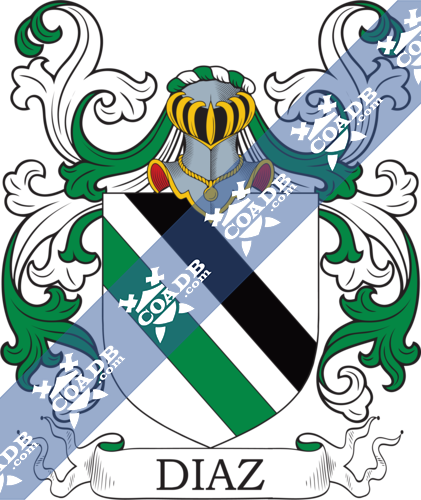
1) Castille – D’argent à deux cotices la première de sable et la seconde de sinople .english: Argent two bendlets the first sable and the second vert.
2) Castille, Andalousie – D’argent au lion de gueules appuyant ses pattes sur un bâton d’or en pal à la bordure de gueules ch de cinq fleurs-de-lis d’or 1 en chef et 2 à chaque flanc l’une sur l’autre .english: Argent a lion gules resting its paws over a baton or palewise a bordure gules charged with five fleur de lys or 1 in chief and 2 with each flank in pale.
3) Aragon – D’or à six cotices d’azur .english: Or with six bendlets azure.
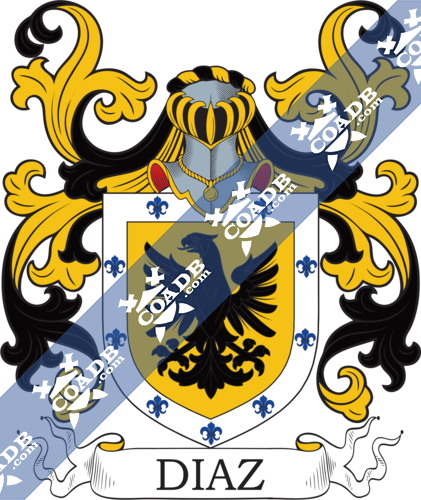
4) Asturies – D’or à l’aigle de sable à la bordure d’argent ch de dix fleurs-de-lis d’azur 3 en chef 3 en pointe et 2 à chaque flanc l’une sur l’autre .english: Or with an eagle sable a bordure argent charged with ten fleur de lys azure 3 in chief 3 in base and 2 with each flank in pale.
5) (ou Diaz-Georgii) – Espagne – (Nob. du St.-Empire, 12 mars 1914) – De sinople au lion d’argent couronné d’or Casque couronné Cimier le lion issant tenant un compas ouvert d’or les pointes en haut .english: Vert of lion argent crowned or Crowned with a helmet Crest: the lion issuant holding a compass (measuring) open or the points upwards.
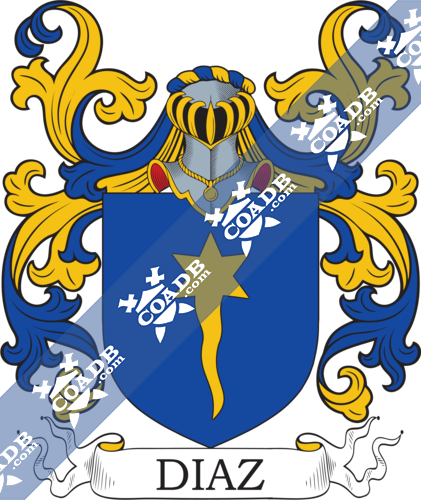
6) ou Diez – Aragon, Castille – D’azur à une comète d’or posée en pal la queue en bas .english: Azure with a comet (star with tail) or placed palewise the tail downwards.
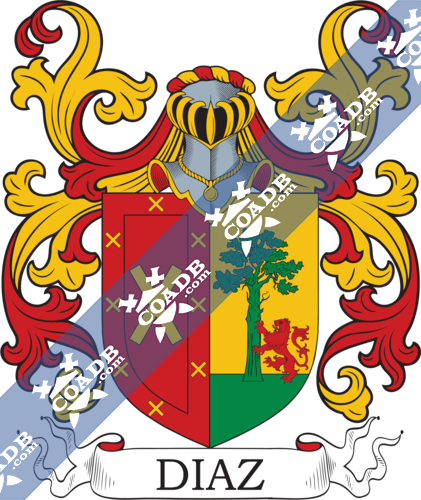
7) Diaz-Benito – Castille – Parti au 1 de gueules au sautoir alésé d’or à la bordure du premier ch de huit flanchis d’or 1 en chef 1 en pointe et 3 à chaque flanc (Diaz) au 2 d’or à un arbre terrassé de sinople senestré d’un lion de gueules rampant contre le fût (Benito) .english: Per pale 1st gules a saltire couped or a bordure of the first charged with eight saltorels or 1 in chief 1 in base and 3 with each flank ( For Diaz ) 2nd or with a tree on a mount vert having to the sinister a lion gules rampant against the trunk ( For Benito).
8) de Medina – Andalousie – Parti au 1 d’argent au lion de gueules tenant de ses pattes un sceptre d’or en pal à la bordure de gueules ch de cinq fleurs-de-lis d’or 1 en chef et 2 à chaque flanc au 2 d’argent à un arbre de sinople acc d’un lévrier passant de sable brochant sur le pied de fût lié au fût dudit arbre le tout soutenu d’une terrasse de sinople à la bordure d’argent ch de cinq mouchetures d’hermine de sable 1 en chef et 2 à chaque flanc .english: Per pale 1st argent a lion gules holding in its paws a sceptre or palewise a bordure gules charged with five fleur de lys or 1 in chief and 2 in each flank 2nd argent with a tree vert accompanied by a greyhound passant sable covering over the foot of the trunk tied [banded] to the trunk of the aforesaid tree all standing on a mount vert a bordure argent charged with five ermine tail sable 1 in chief and 2 with each flank.
9) de Osseguera – Andalousie, Brabant – (An., 16 sept. 1693) – Parti au 1 d’or à un arbousier de sinople fruité de gueules posée sur une terrasse de sinople adextré d’un ours au naturel rampant contre le fût de l’arbre au 2 d’argent à sept têtes de More les turbans de gueules tortillées d’argent et posées 2 2 2 et 1 Cimier trois plumes d’autruche .english: Per pale 1st or with a strawberry bush vert fructed gules placed on a mount vert having to the dexter a bear proper rampant against the trunk of the tree 2nd argent with seven heads of Moor the turbans gules wreathed argent and placed 2 2 2 and 1 Crest: three ostrich feathers.
10) de Vegadanzo – Castille – De sinople à sept arbres d’or 3 et 4 posés chacun sur un petit monticule d’argent et en pointe d’un pré de sinople dans laquelle roule un ruisseau d’azur agité d’argent .english: Vert with seven trees or 3 and 4 placed each over a small hillock argent and in base a meadow vert in which flows a brook azure with curling waves argent.
11) de Villafranca – Originaire de Burgos – Ajouter Cimier une tour d’or .english: As above with a crest of a tower or
12) de Villafranca – Catalogne – (Rivista araldica, 1903) – D’azur à huit besants d’argent rangés en deux pals les deux besants du bas défaillants de moitié en pointe à la bordure de gueules chargée de huit tours d’or .english: Azure with eight bezants argent arranged in two palets the two bezants from the base missing the half in base a bordure gules charged with eight towers or.
13) Y Mercado – Espagne – D’azur à la bande acc en chef d’un soleil figuré et en pointe d’un croissant figuré et tourné le tout d’or .english: Azure a bend accompanied by in chief a sun figured [with a face] and in base a crescent figured [with a face] and reversed all or.
14) Los de Burgos y Palencia, traen: En campo de plata, una cruz, de gules, floreteada, y cargada de cuatro veneras, de oro.English: Ar, on a cross flory gu. four escallops or.
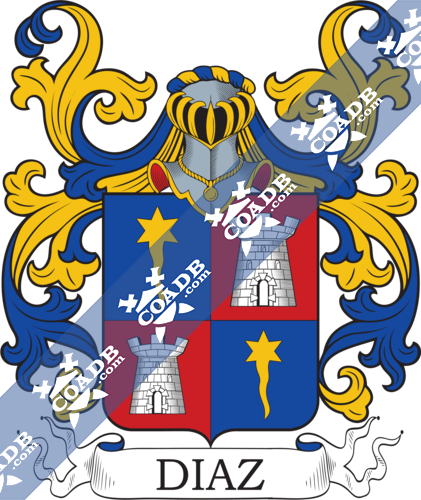
15) Otros traen: Escudo cuartelado: 1º y 4º, en campo de azur, una estrella, de oro, con el rayo de abajo mas largo que los otros, y 2º y 3º, en campo de gules, una torre, de plata.English: Quaterly, 1st and 4th, az. comet or, placed palewise the tail downwards, 2nd and 3rd, gu, a tower ar.
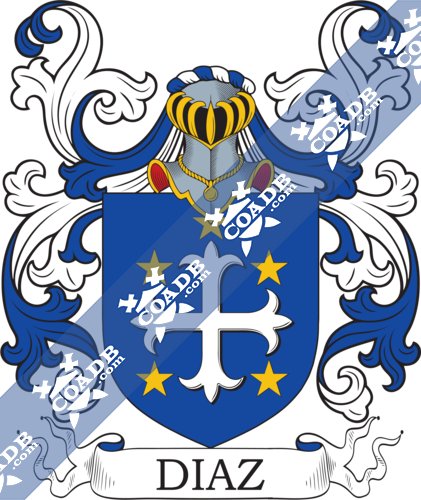
16) Los de Peralejos, en el Señorío de Molina, traen: En campo de gules, una cruz flordelisada de plata, acompañada de cinco estrellas de oro, una en cada hueco de la cruz y otra en el jefe.English: Az, a cross flory ar., accompanied by five mullets or, one an each hollow of the cross and another on the top.
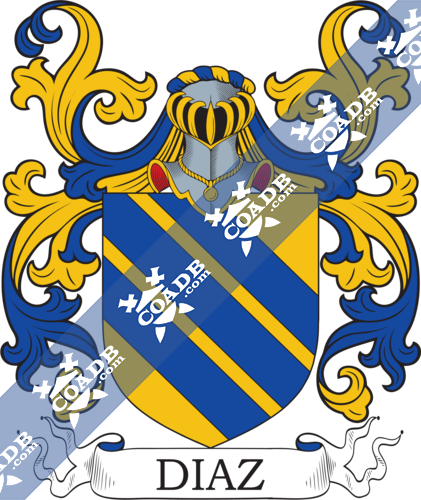
17) Los de Aragón, traen: En campo de oro, tres bandas, de azur.English: Or, three bends az.
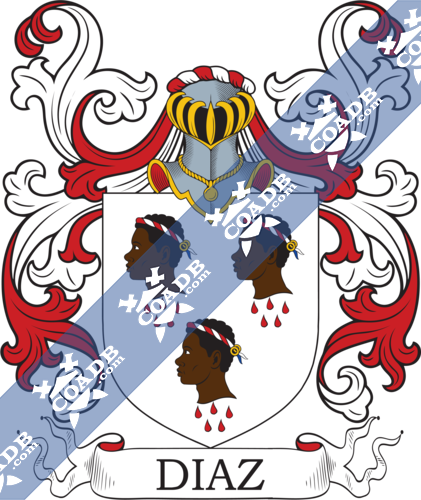
18) Los de Nicaragua, traen: En campo de plata, tres cabezas de moro, mal ordenadas, goteando sangre.English: Ar, three Moor’s heads couped, dropping blood.
19) Otros de Castilla, traen: En campo de oro, un águila, de sable, acompañada de dos puntas de lanza, de azur.English: Or, an eagle sa., accompanied by two spearheads az.
20) Otros de Asturias, traen: En campo de azur, tres bandas, de plata, acompañadas de diez estrellas, de oro, puestas una, cuatro, cuatro, una.English: Az, three bends ar, accompanied by 10 mullets or., in order 1,4,4,1.
21) Otros de Santander y Galicia, traen. Escudo cuartelado: 1º y 4º, en campo de azur, una estrella, de oro, y 2º y 3º, en campo de plata, un árbol arrancado, de sinople.English: Quaterly, 1st and 4th, az. a mullet or, 2nd and 3rd, ar, a tree eredicted vert.
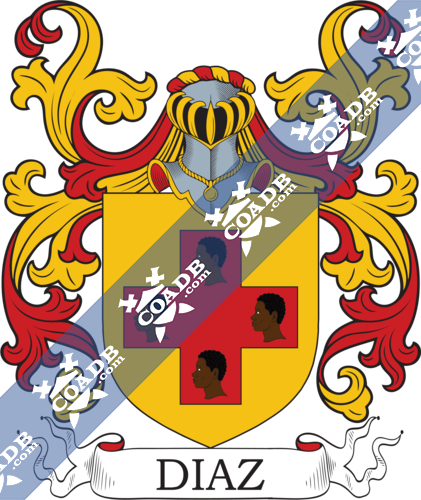
22) Otros de Cantabria, radicados en Venezuela, traen: En campo de oro, una cruz recortada, de gules, cargada de cuatro cabezas de moro, una en cada brazo.English: Or, a cross couped gu., charged with four Moor’s heads, each one in tines of cross.
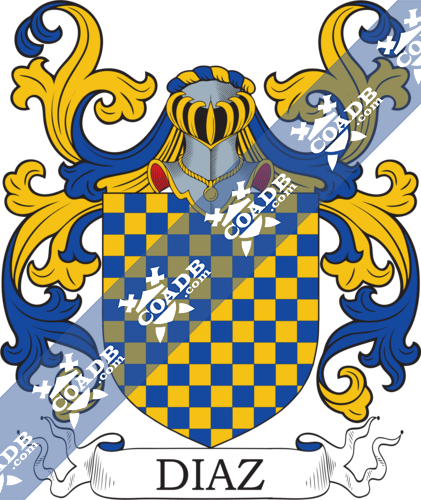
23) Otros radicados en Orense, pasados a Quito, Ecuador, traen: Ajedrezado de oro y azur.English: Checky, or and az.
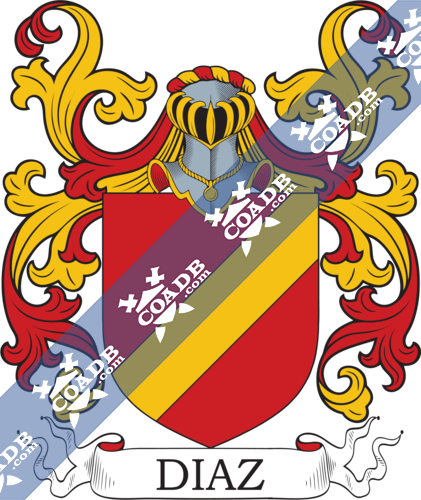
24) Otros originarios de Requena, Valencia, traen: En campo de gules, una barra, de oro.English: Gu, a bend sinister or.
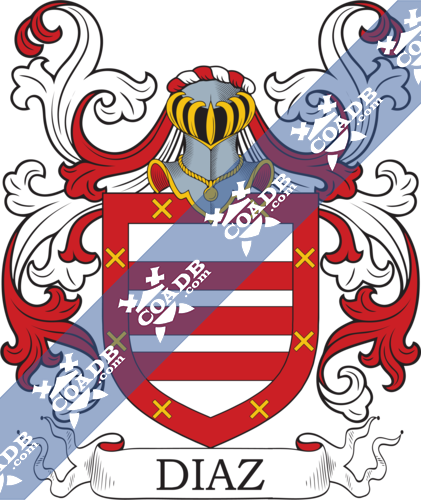
25) Otros radicados en Cuenca, traen: En campo de plata, tres fajas, de gules; bordura de gules, con ocho aspas, de oro.English: Ar, three bars gu, within bordure of the second charged with eight saltires or.
26) Los de San Vicente de la Barquera, en Cantabria, y los de Lorca, en Murcia, traen: En campo de gules, un lucero, de oro; bordura de plata, con ocho armiños, de sable.English: Gu., a star or., within bordure ar. charged with eight spots of ermine sa.
27) Los que se establecieron en Baeza, traen. En campo de gules, un sotuer, de oro; bordura cosida de gules, con ocho sotueres, de oro.English: Gu, a saltire or., within bordure of the first charged with eight saltires of the second.
28) Los de Magallón, en Zaragoza y Alfaro en La Rioja, traen: En campo de gules, un castillo, de plata, cargado de una bandera, de oro, cuya asta llega hasta la punta del escudo, donde la tienen asida dos brazos armados, de plata.English: Gu, a tower ar charged with a flag or which point reach a top of the shield, supportet by two arms in armour ar.
29) Otros de Valencia y Aragón, traen: Escudo cuartelado: 1º y 4º, en campo de azur, un cometa, de oro, y 2º y 3º, en campo de plata, un árbol, de sinople. English: Quaterly, 1st and 4th, az, a comet or, 2nd and 3rd, ar, a tree vert.
30) Otros de Huerta de Valderrabanos, en Toledo, traen: En campo de oro, una estrella, de azur.English: Or, a star az.
31) Otros traen: En campo de oro, dos lobos, de sable, linguados de gules; bordura de gules, con cinco sotueres de gules.English: Or, two wolves sa., langued gu., within bordure of the last charged with five saltires of the first.
32) Otros traen: Escudo cuartelado: 1º y 4º, en campo de azur, un sol, de oro, y 2º y 3º, en campo de plata, una flor de lis, de azur.English: Quaterly, 1st and 4th, az, a sun or, 2nd and 3rd, ar, a fleur de lis az.
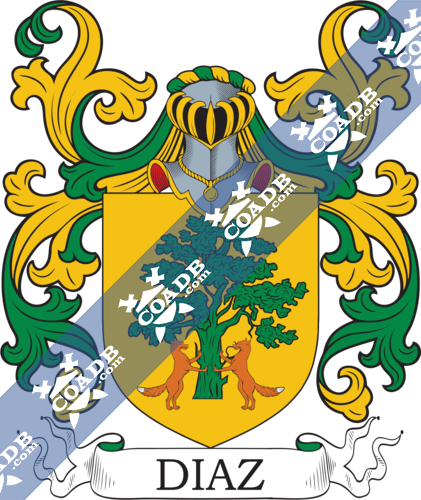
33) La casa de Albarracín y varias ramas en poblaciones de Aragón, traen: En campo de oro, un árbol de sinople, acostado de dos zorros, de su color, empinados al tronco.English: Or, a tree vert, accompanied by two foxes ppr fessewise, step to the trunk.